
Summer Pest Watch
Summer is a peak season for many pest insects that thrive in the hot, dry weather. It’s important to be aware and catch infestations as early as possible before they wreak havoc on your lawn and garden. Keep an eye out for the following ‘bad bugs’ and use the recommended products to protect your plants from damage this season!

Spotted LanterNfly


Spotted Lanternfly is an invasive pest that puts plants at risk, and should always be killed when spotted. Keep an eye out for invasive Tree of Heaven (Ailanthus altissima) and remove any you may find on your property. These are the host plants of Spotted Lanternfly, and help them spread. Right now, keep an eye out for nymphs (black or bright red in their final stage, spotted, long, thin heads). Adults begin to emerge in late July, and egg masses are typically laid in fall. Both nymphs and adults suck sap from trees, causing significant damage.
Learn more at https://portal.ct.gov/deep/forestry/forest-protection/spotted-lanternfly
What to look for
Large clusters of nymphs/adults, oozing/weeping plants, fermented odor, brown sticky fluid (honeydew) on plants and/or the ground underneath, hatched egg masses, and black sooty mold on leaves
Control
Harris Spotted Lanternfly Killer (Get it now for $5 off!), Captain Jack’s Organic Deadbug Brew (safe for edible crops)


Japanese Beetles

July is one of the most active months for Japanese Beetles. Adults love the hot sunny weather, feeding on plants and laying eggs underground. These eggs will hatch and feed on grass roots through late fall, destroying lawns.
Learn more at https://portal.ct.gov/caes/fact-sheets/entomology/the-japanese-beetle-popillia-japonica-newman-scarabaeidae-coleoptera
What to look for
Plant damage from adults: skeletonized plants due to feeding on the tissue between the veins of plants. Roses, fruit trees, beans, corn, tomatoes, and numerous ornamental shrubs and plants are especially at risk
Lawn damage from grubs: Thinning or dead patches of grass and a spongy feeling underfoot as you walk across your lawn. Another sign of damaged roots is being able to easily peel the grass back
Grub Control
Organic grubGone, Bayer Advanced 24 Hour Grub Killer Plus


Beetle Control
Organic Pyrethrin Garden Insect Spray, Organic Japanese Beetle Killer, Organic beetleGone


Aphids

Aphids are a common pest across many types of plants, starting in spring and continuing through fall. They suck sap from plants, affecting growth, yield, and increasing susceptibility to other pests and diseases. Aphids are also known to transmit plant viruses.
Learn more at https://gardeningsg.nparks.gov.sg/page-index/pests/aphids/
What to look for
Stunted plant growth, leaf curling & yellowing, distorted growth. Like Spotted Lanternfly, Aphids excrete a sticky ‘honeydew’ residue
Organic Control
Captain Jack’s Neem Max, Insecticidal Super Soap, and Tomato & Vegetable. You can also control aphids naturally with ladybugs or lacewings, available at any of our stores (limited stock).


Non-Organic Control
BioAdvanced Rose & Flower Insect Killer, Eight Garden & Home, Eight Yard & Garden


Woolly Adelgid

Woolly Adelgid is an invasive insect that has been very prevalent this year. They affect hemlock in large numbers and can even kill host trees within a few years. These insects feed on the stems of hemlocks, preventing new growth. Systemic control is no longer available in CT; however, you can control Woolly Adelgid by spraying and applying insecticides as needed. If a Hemlock is too large to reach for contact sprays, you may need to contact an arborist to treat it.
Learn more at https://portal.ct.gov/caes/publications/publications/hemlock-woolly-adelgid
What to look for
White, woolly masses at the base of needles, especially on the undersides of branches, premature needle loss, graying needles
Spray on Control
Captain Jack’s Neem Max, Insecticidal Super Soap
Spider Mites

Depending on the season, you might see different kinds of spider mites. Two-spotted spider mites are warm-season mites that are active in the hot, dry months of July & August. They damage and even kill plants by sucking cells from plants. Since mites are technically arachnids, it’s important to use miticides as opposed to insecticides, which are not always reliable in killing mites.
Learn more at https://gardeningsg.nparks.gov.sg/page-index/pests/spider-mites/
What to look for
Webbing on the undersides of leaves and between stems, stippling/spots on leaves, stunted growth, and eventual leaf drop. Fruit trees, vegetables, berries, vines, houseplants, and ornamental plants are the most at risk
Organic Control
Captain Jack’s Neem Max, Insecticidal Super Soap, and Captain Jack’s Deadbug Brew
Non-Organic Control
Eight Yard & Garden, BioAdvanced Rose & Flower Plant Care, 3-in-1 Insect Disease & Mite Control


fourLined Plant Bug
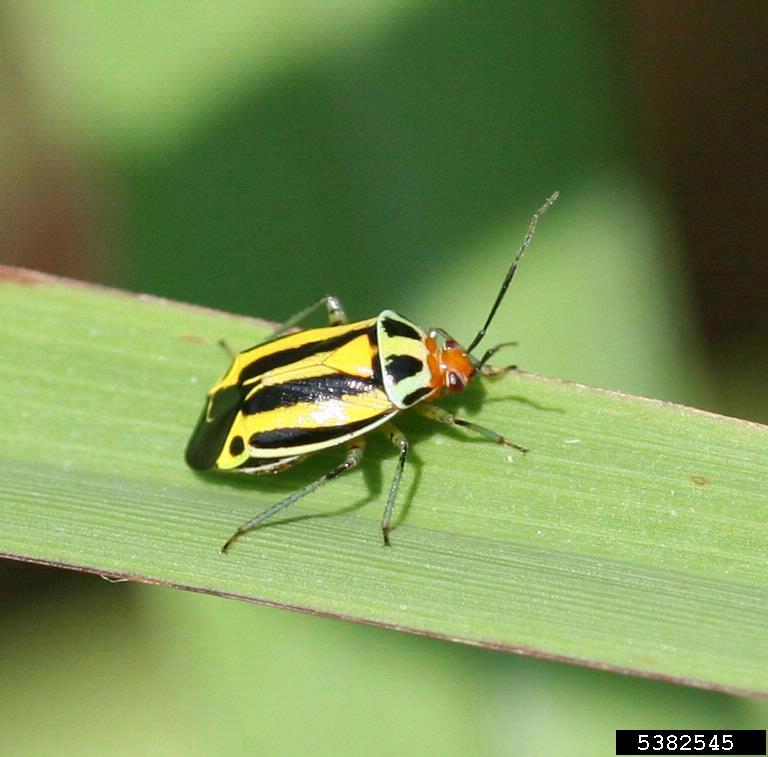
Fourlined plant bug is one of the least harmful pests active around this time, often mistaken for leaf spot and other issues. Damage caused to plants is primarily cosmetic, rather than affecting overall health. In most cases, fourlined plant bugs should be ignored. If you notice an unusually large number of bugs or damage, you can use insecticidal oils or pyrethrin to treat them. The best time to spray, if you choose to do so, would be after sunset/early evening when they are most active.
Learn more at https://extension.umn.edu/yard-and-garden-insects/four-lined-plant-bugs
What to look for
Black or brown sunken spots on leaves
Control
