
Fall Gardening Checklist
Fall is a busy season in the garden! Gorgeous green lawns and healthy plants for next year start with what you do now. Check off these important tasks to protect your plants this winter!
DON’T PRUNE EVERYTHING
Resist the urge to prune roses, trees, and shrubs! This task is better saved for next spring. Most perennials can be pruned in the fall, EXCEPT those listed below.
- Geum
- Ornamental grasses
- Russian Sage
- Lavender
You can, however, always deadhead and clean up anything that looks dead or diseased. Be sure to disinfect your pruners between uses so you don’t spread any diseases to other plants. It is also important to note that fungal spores will overwinter if fallen leaves of infected plants are left underneath them. Rake away and dispose of them as needed.
Plant Spring-Blooming Bulbs
Spring flowers like daffodils, tulips, crocus, snowdrops, and alliums should be planted now (before frost!) to enjoy a colorful spring next year. Plant with bone meal and Bulb Tone to promote healthy root growth for large, plentiful blooms. Don’t forget to grab a few extra bulbs for forcing in pots to get early spring color indoors!
Fertilize
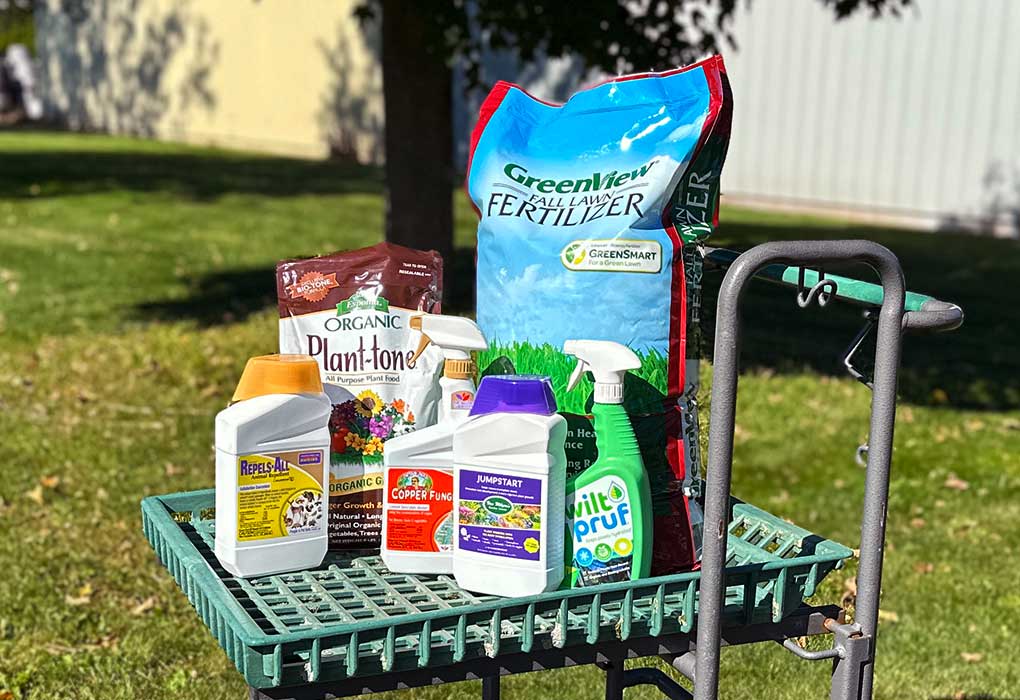
Feed trees, shrubs, perennials, roses, and fruit trees with half dose of plant fertilizer (such as Plant Tone) now to give them a good start in spring. Roots will hang on to the fertilizer you apply now and come spring your plants and lawns will get that extra boost they need to push out new growth, especially following a harsh winter. Add Van Wilgen’s JumpStart to help plants recover from drought stress.
Fertilizer GuideGive your lawn some love
Set your lawn up for success next spring! Fall is a great time to seed a new lawn or fill in bare patches because the soil is warm and nights are getting cooler, leaving a nice coating of morning dew.
- Check soil pH and apply lime if it’s below 6.2
- Use a fall fertilizer (step 4) like Espoma Organic Fall Winterizer or GreenView Fall Lawn Food with GreenSmart
- Overseed bare patches to prevent weeds next year
Bring houseplants inside
Bring heat-loving plants like houseplants, tropicals, & citrus indoors, especially as the nights go below 50°. Give them a good hose off before moving them and treat pest issues with Neem Max and use Mosquito Bits for fungus gnats.
deter pests
Protect your plants from grazing animals this winter! Combine liquid and granular repellents for best results.
- Deer: Use Liquid Fence Deer & Rabbit Repellent and Messina’s Animal Stopper
- Moles and voles: Apply I Must Garden Mole and Vole Repellent® before the first snowfall
Get ahead of fruit tree issues
Protect next year’s fruit on trees by spraying Captain Jack’s Copper Fungicide once the leaves have fallen. Wait to prune until late february before the trees break dormancy!
prep your garden beds for winter
Clean out debris and add lime to create sweet soil. Put it to bed with a cover crop such as clover or winter rye!
protect evergreens
Apply Wilt Pruf® around Thanksgiving to broadleaf evergreens to protect them from winter damage and browning. Reapply after the New Year!
Empty containers
Prevent pot freezing and cracking! Be sure to empty, clean, and turn any containers upside down before it gets too cold.
Other important tips to keep in mind for fall:
- You don’t have to rake up leaves! They will break down and release nutrients into the soil, acting as a great compost. Fall leaves also help insulate and protect plant roots as temperatures continue to drop.
- Keep watering! Proper watering, especially when we aren’t getting enough rain, is essential for healthy plants come spring. This past winter we saw a lot of well established plants fail as a direct effect of fall drought.
