Managing Fungal Disease
Common fungal diseases like rust and powdery mildew tend to pop up in our lawns and gardens during periods of excess rain and humid summer temperatures. Keep an eye out for telltale signs, and always begin treatment at the first sign of disease to prevent spread!
Lawn Fungus
Fungus is the cause of most lawn diseases and can be prevented with good watering habits and by maintaining a full, vigorous lawn. Always make sure you water in the early morning and check sprinklers to ensure they are functioning correctly. If you notice signs of disease, be sure to begin treatment ASAP to prevent it from spreading.
Signs to look for:
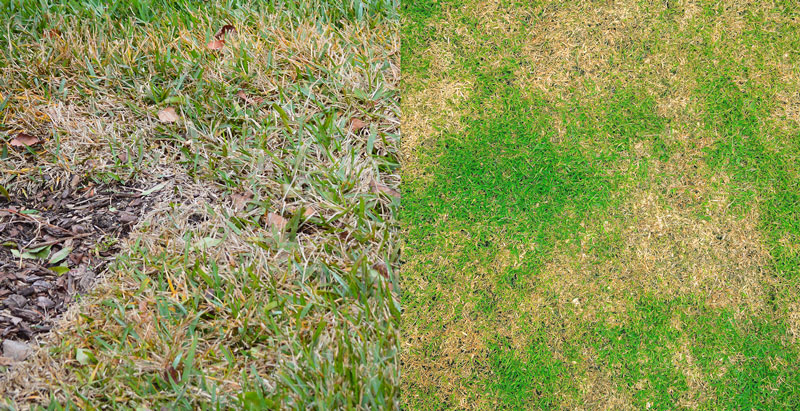
- Circular or irregular spots of dead, sunken, or brown grass
- Straw-like yellow spots
- Web-like/cotton coating on grass blades on damp mornings
- Thinning grass that becomes rust-colored
- Browning spots that don’t improve with regular watering
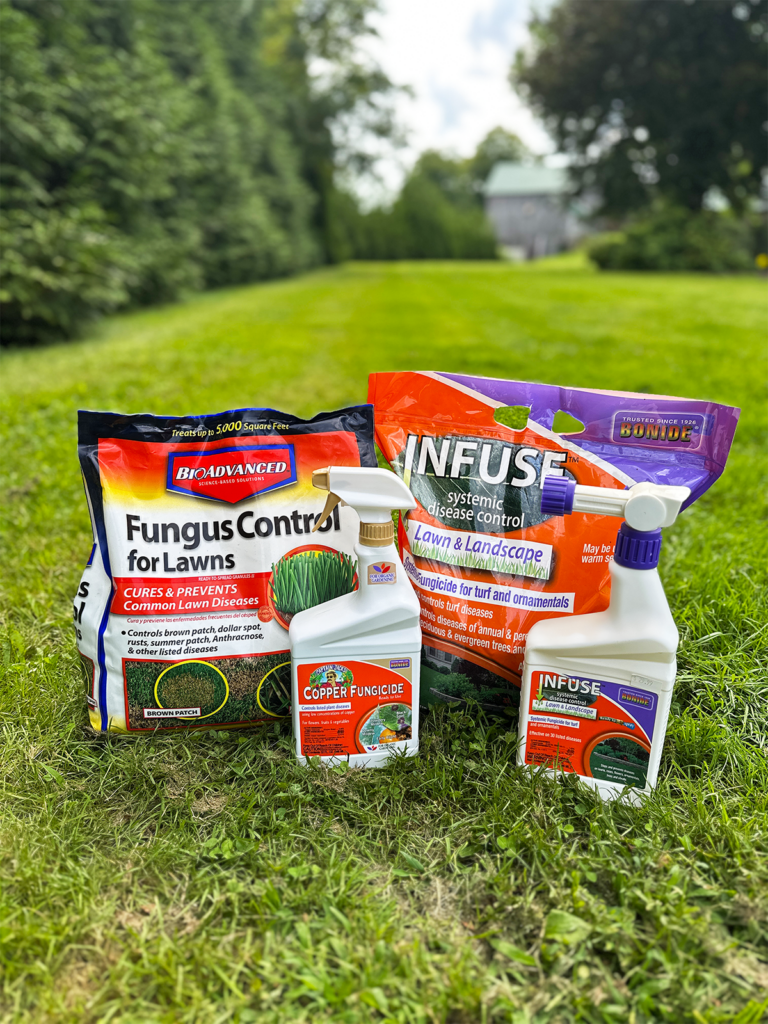
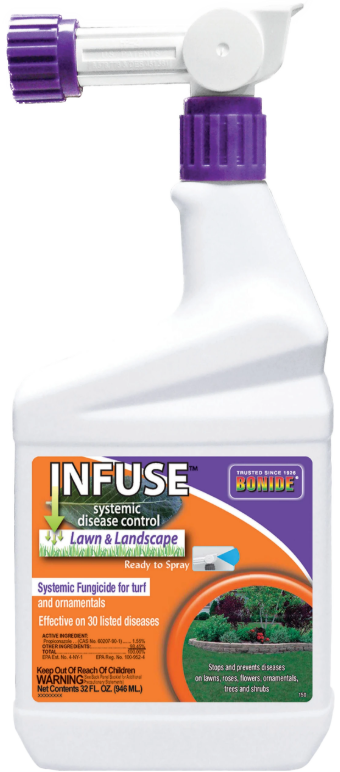
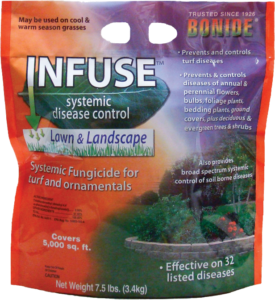
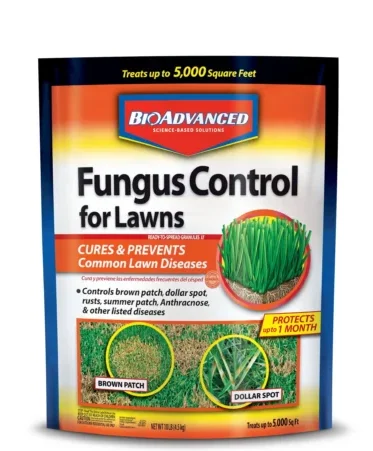
For prevention and treatment of common lawn diseases, we recommend applying BioAdvanced Fungus Control for Lawns or Bonide Infuse Systematic Disease Control!
BioAdvanced Fungus Control application instructions:
- Apply at the first signs of disease or before conditions are favorable to use as a preventative treatment
- Disperse with a rotary or drop spreader at the rate listed on the package label
- Water lawn after application
- Controls 12+ common diseases and treats up to 5,000 sq ft
- Repeat every 30 days for prevention and every 14 to treat an active disease
Bonide Infuse application instructions:
- Apply at the first signs of disease for best results
- Effective on 30 common lawn and garden diseases
- Stimulates growth of newly planted cool season lawns
- Ready-to-Spray
- Attach to a hose-end sprayer and apply evenly to entire lawn after mowing
- Treats up to 3,200 sq ft
- Reapply every 14-28 days depending on disease being treated (see label)
- Granular
- Use a ground-based spreader at the rate listed on the label
- Water lawn after application to activate
- Treats up to 5,000 sq ft
- Reapply every 14-21 days depending on disease being treated (see label)
Garden Fungus
It’s important to keep a sharp eye on plants that are especially prone to issues like roses, hydrangea, dogwood, and veggies. If you notice signs of fungus, be sure to remove affected leaves and treat them with fungicide as soon as possible. Left untreated, these issues can spread and affect the plant’s overall health, even infecting nearby plants. Make sure to sanitize tools appropriately to prevent spreading disease to healthy plants.
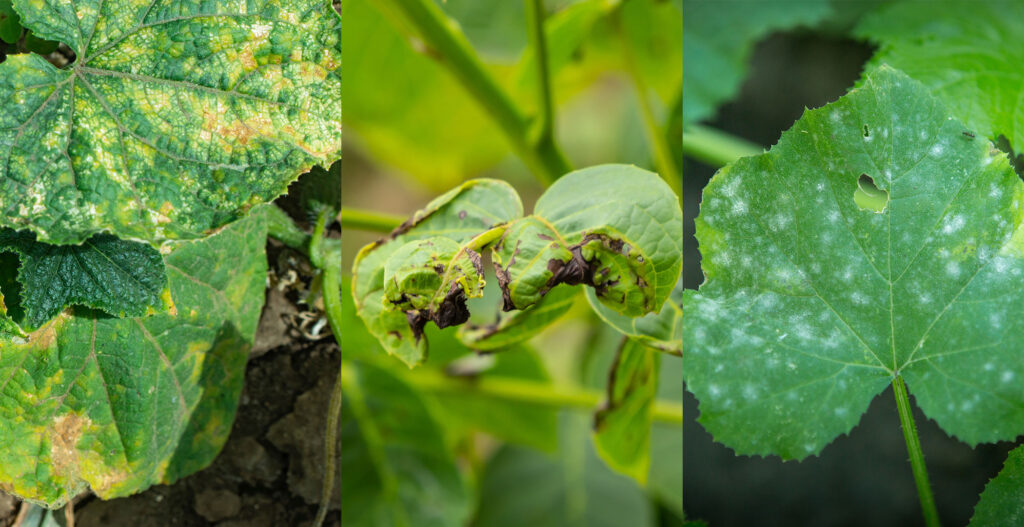
Signs to look for:
- drooping or wilting
- white spots or ashy-looking leaves
- reddish or black spots that turn orange/yellow
- raised orange spots
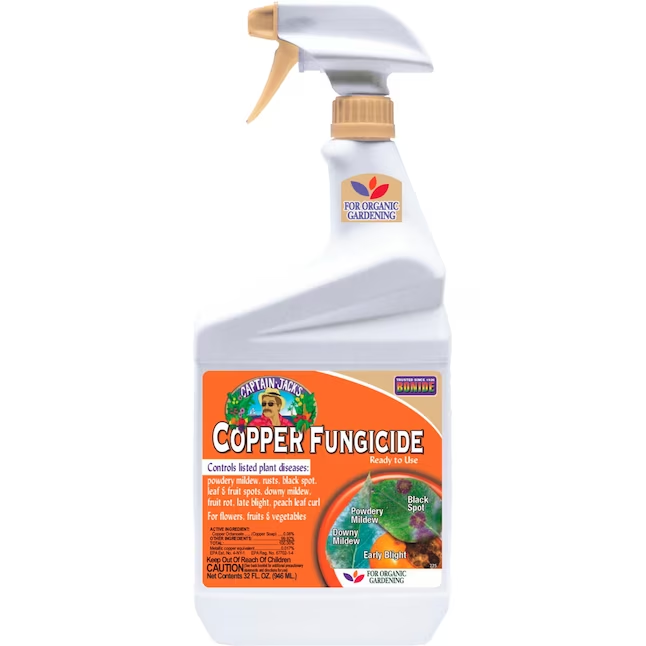
After diagnosing fungus as the cause of your problems, we recommend applying Captain Jack’s Copper Fungicide! This is a great option for both preventing fungal diseases and attacking them as they arise. It’s organic and proven to treat common fungal issues like Powdery Mildew, Blight, Rust, Leaf and Fruit Spot, and more.
Application instructions:
- For best control, begin treatment 2 weeks before disease normally appears or when weather forecasts predict a long period of wet weather.
- Alternatively, begin treatment when disease first appears and repeat at 7 to 10 day intervals for as long as needed.
- If possible, time applications so that 12 hours of dry weather follow the application.
- For concentrate, dilute at a rate of approximately 1 ounce per gallon of water, apply 1 to 2 gallons of water per 1,000 square feet